


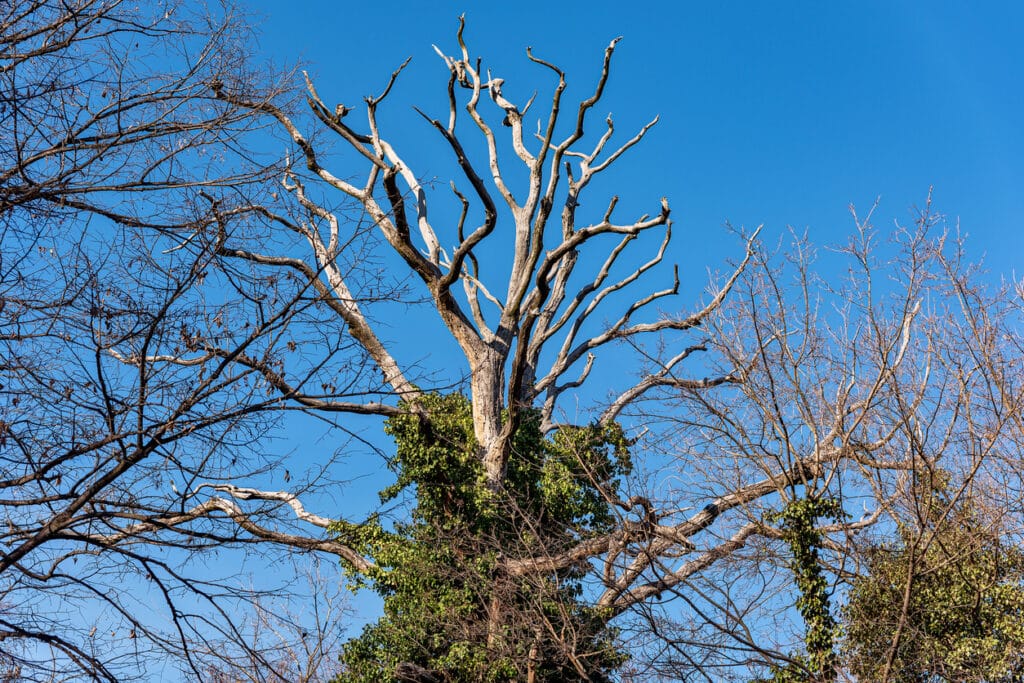
When summer heat kicks into high gear, your trees feel it—sometimes more than you think. Drought stress isn’t always dramatic at first glance, but left untreated, it can quickly turn healthy trees into fire hazards. And here in the high desert climate of Reno, Sparks, Carson City, and nearby communities, late-summer drought is when trouble often shows its face.
Here’s what to watch for, why it matters, and how professional care from a certified arborist can help your trees survive the season.
What Drought Stress Looks Like in Trees
Drought stress is a physiological response to water shortage—and it shows up differently depending on species, soil, and site conditions. The earlier you catch it, the better the outcome.
Common Warning Signs:
- Leaf scorch: Leaves may turn brown at the edges or curl inward, especially on the sunnier side of the canopy.
- Early leaf drop: Deciduous trees may begin dropping leaves well before fall.
- Canopy thinning: Sparse foliage and branch dieback in the upper crown.
- Stunted growth: New shoots may be shorter, fewer, or discolored.
- Cracking bark: Some trees show fissures or bark splitting when under extreme moisture stress.
If you’ve noticed any of these signs in your landscape, it’s time for a professional evaluation from American Arborists.
Why Drought-Stressed Trees Are a Bigger Risk
Beyond just looking unhealthy, drought-stressed trees are structurally and biologically more vulnerable. Here’s why it’s a serious concern:
They ignite more easily.
Dry wood and leaf litter increase the risk of ignition—especially in red flag conditions.
They attract pests.
Borers, beetles, and other insects target weakened trees. Once infested, recovery becomes much harder.
They can fail without warning.
Drought compromises root systems and branch stability, making sudden limb or tree failure more likely during wind, heat, or storms.
How We Help: Tree Health + Fire Readiness
At American Arborists, our certified team uses science-backed tools and strategies to assess, treat, and protect drought-stressed trees before it’s too late.
Our drought-season services include:
- Root zone inspections to assess soil compaction and water infiltration
- Canopy pruning for fire-safe structure and reduced water demand
- Bio hydration treatments to replenish root moisture and reduce drought shock
- Defensible space planning to meet local fire safety guidelines
- Soil health care programs to improve water uptake and resilience over time
Each property is different. That’s why we offer tailored solutions for your exact location, species mix, and risk level.
Pro Tip: Drought + Pest Stress = Double Trouble
Trees experiencing both drought and pest pressure (like bark beetles or borers) are in real danger. If you’re seeing leaf scorch and holes in the trunk or branches, call us immediately. These trees may already be under attack and need urgent care.
Frequently Asked Questions
How often should I water my trees during a drought?
It depends on the tree type, age, and soil conditions, but deep watering once every 7–10 days is generally best. Avoid shallow, frequent watering—it encourages weak surface roots.
Will mulch help protect trees from drought?
Absolutely. A 2–4 inch layer of mulch (kept away from the trunk) helps retain soil moisture, moderate temperature, and improve root health.
Is summer too late to prune for fire safety?
Not at all. Late summer pruning can help reduce canopy weight and create separation between trees and structures—key elements of defensible space.
Can a stressed tree recover?
In many cases, yes. But the sooner you intervene, the more likely your tree can rebound. Some species bounce back with hydration and health care—others may need selective pruning or, in severe cases, removal.
What is “biohydration”?
It’s a soil-injected treatment designed to improve moisture availability and uptake during drought. We use it on high-value trees to help restore balance to root systems under stress.
Don’t Wait Until They’re Gone
Your trees are one of the most valuable parts of your landscape—but they won’t tell you they’re stressed until symptoms show up. By then, the damage may be underway.
📞 Contact American Arborists today at (775) 352-4241 to schedule a tree health inspection or drought stress consultation. Or learn more at https://american.jdmps.com/tree-tips/.